
Team Building for Large Events
Three hundred people in a room, and every one of them with something to do.
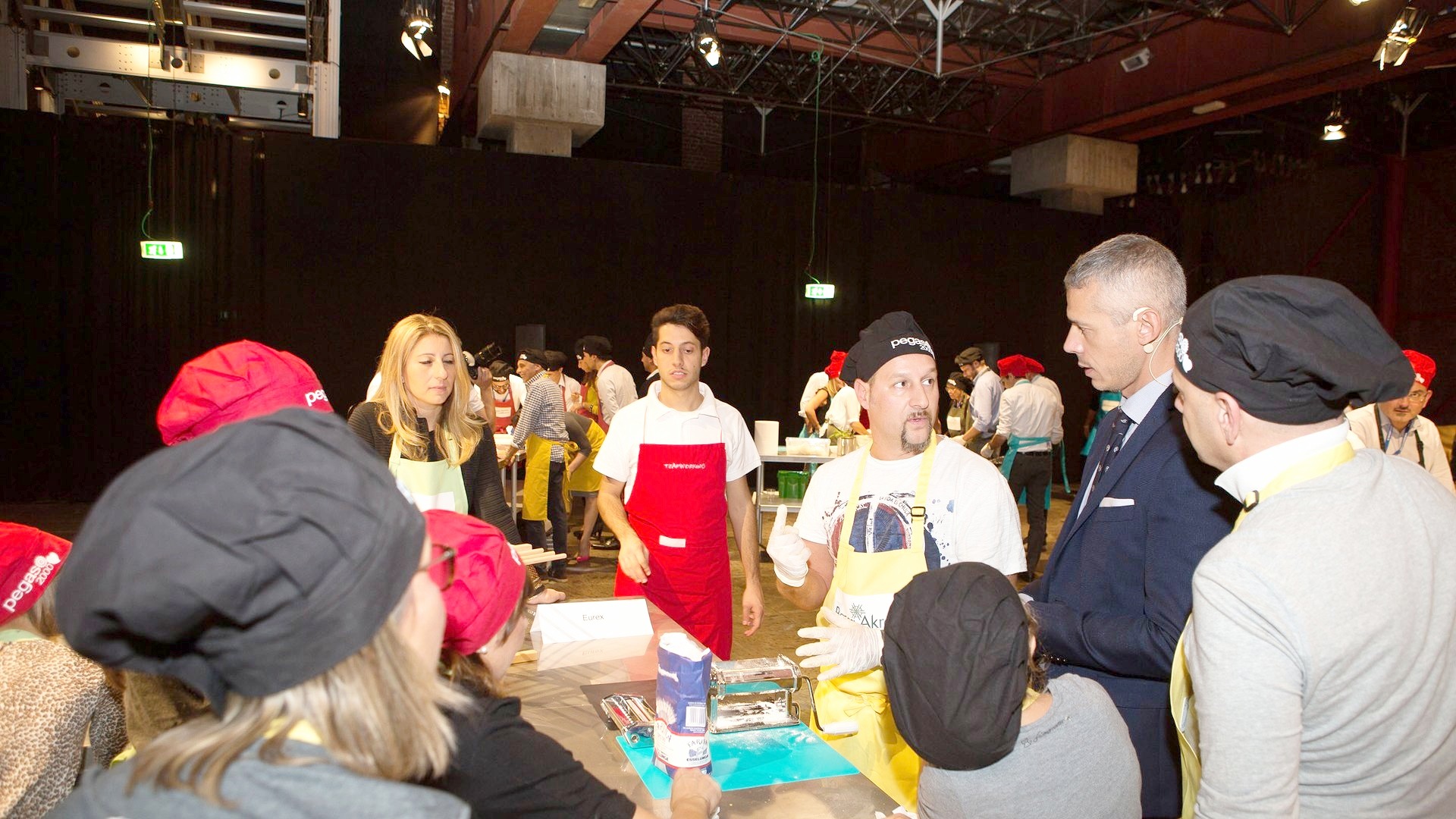
With three hundred people in a room the risk has a precise shape: thirty doing something and two hundred and seventy looking at their phones. The second risk is time: the window is ninety minutes, between the CEO's speech and dinner, and nobody moves it for us. The third is that there is only one evening. If it goes wrong, it goes wrong in front of the whole company, and the name on the programme is yours.
The numbers we have already done
We have taken an activity to 600 participants at once. Movie Making with 600 people, forty crews shooting in the same afternoon and a single screening. Pasta Making with 300 sfoglini, in a Palladian villa and its garden turned into a giant fresh-pasta workshop. A cooking competition at 300, with a jury. A Corporate Song written and recorded by 300 voices. Escape Box up to 300, one case per ten people. Cocktail Challenge at 260. Choir and orchestra beyond 100, with people who had never played an hour earlier.
How we hold a room of three hundred
We always start from a proven format, and then we design it on your case: why this convention, what the message is, who is in the room, what should stay. To do that we need to understand the context and know who to work with: the agency running the event, HR, the CEO's office, the venue staff. A large event works when these people speak the same language from the first site visit.
Time is the thing we are most honest about. Now and then we are asked for a miracle in twenty minutes. Twenty minutes is fine for an icebreaker. Activating two or three hundred people, turning an audience into teams that decide, build and present, takes time, and it is worth giving it. Cutting the duration looks like a saving and is almost always the opposite: set-up, facilitators and direction cost the same, and you go home with less.
Numbers are handled by addition: one case per ten people, one table per ten, one crew per fifteen. The programme is built backwards from the hour that does not move, usually dinner, with a central direction keeping the pace of the whole room and a facilitator for every group of tables. International rooms are our ground: everyone on our team speaks English, facilitators are chosen for the languages in the room, and materials are bilingual when needed. And we prefer to prevent problems rather than fix them: site visit or floor plan, the room's constraints in the project before the day, set-up done while the plenary is still on.
What it looks like
Hundreds of people in one room, all with something to do.
Before you sign, we tell you three things
Which formats we advise against at your numbers, before the quote. What the day will look like, with the real timings, the number of facilitators and what we have planned for your room, written in the proposal. And who we have done it with before: if you want to talk to someone who organised it before you, we put you in touch.
Tell us date, room and number of participants
Within 24 hours you receive a proposal with the formats that hold up with your numbers, and with the ones we would advise against.